
Nutrition Informatics: Unlocking New Opportunities for Dietitians
The intersection of nutrition and technology is opening up exciting new career possibilities, and one field leading the way is nutrition informatics. Imagine combining the precision of data with the art of personalized healthcare and healthcare management to revolutionize how nutrition is delivered. If you're a dietitian or healthcare professional, this growing area can elevate your expertise and career prospects.
Hello and Welcome! I’m Stacey Dunn-Emke, and I’m the founder of NutritionJobs and DietitianSalaries, resources designed to help you land your dream job (and the data to support your dream salary, too!).
Nutrition Informatics has been around a long time but recent advances in technology, computer systems, and analytics have opened up new possibilities, specifically for dietitians. If fact, there is a Dietetic Practice Group dedicated to Nutrition Informatics (I'm a member - you should join too!).
In this article, I'm diving into what nutrition informatics is, the evolving roles and opportunities it brings, job market and salary trends, and practical tips to start your career in this dynamic field.
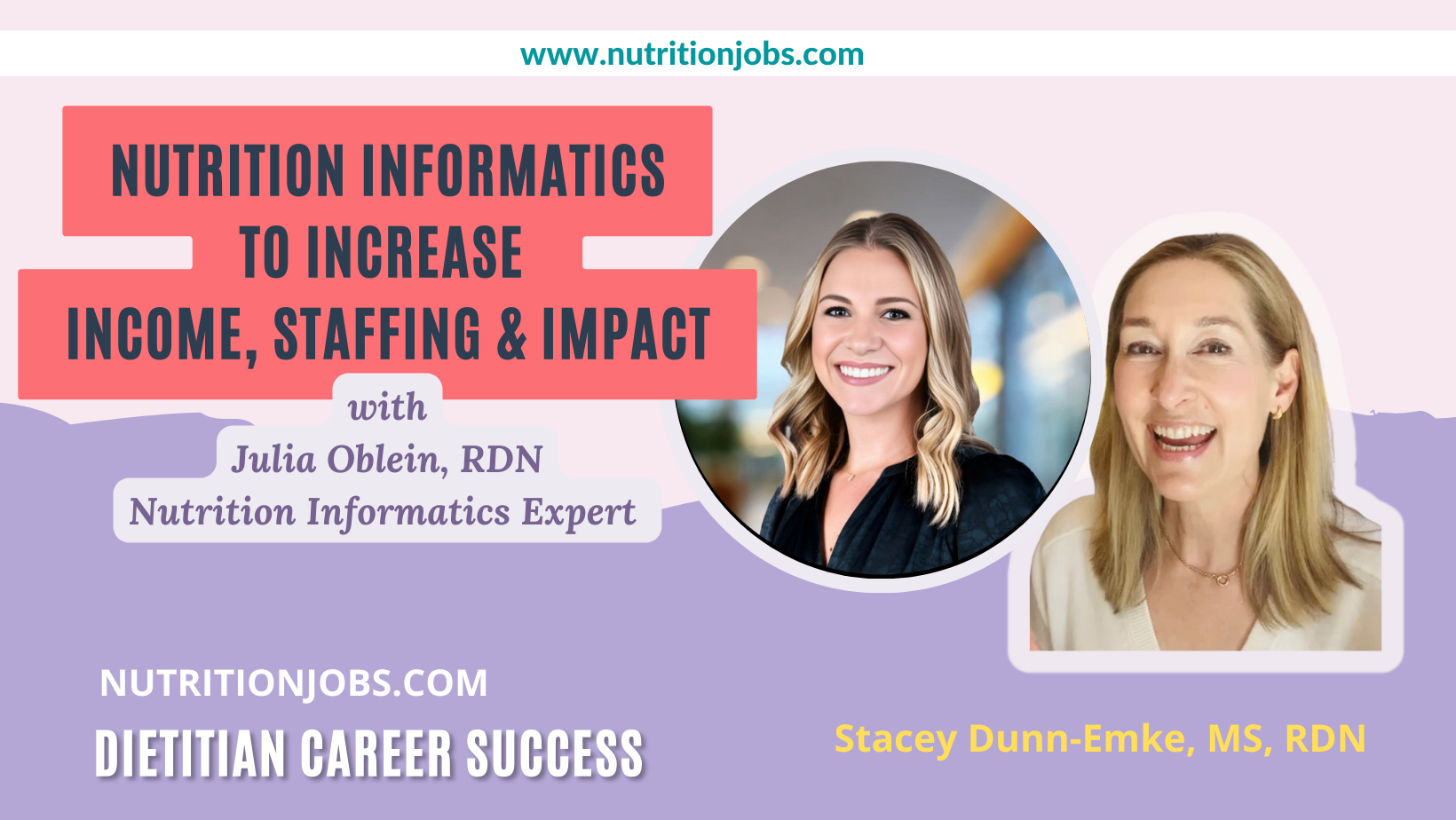
To get a better understanding from an expert, I interviewed Julia Obline, RDN, Corporate Director of Malnutrition Programs, on how nutrition informatics is transforming dietetics from the inside out. Watch below.
What Is Nutrition Informatics?
Nutrition informatics is the integration of nutrition, information, and technology to help healthcare professionals optimize their practice (SOURCE). It involves managing and analyzing nutrition-related data, from food analysis and nutrient databases to patient-specific dietary recommendations.
This field plays a critical role in tailoring dietary plans to individual needs while ensuring compliance with electronic health record (EHR) regulations. By merging technology and healthcare, professionals can deliver precise and impactful solutions.
For example, Christopher A. Taylor, PhD, RDN, LD, FAND, Dietary patterns researcher, Professor and Director of Medical Dietetics at The Ohio State University School of Health and Rehabilitation Sciences, shares his experiences using food modeling as a member of the Dietary Advisory Committee to shape the 2025 Dietary Guidelines for Americans (DGA).
Every five years, the DGA is developed through a thorough review of the most current research data and published peer-reviewed articles. For the first time, the process to develop the DGA was additionally supported by the robust food modeling that Dr. Taylor and the 20-member committee completed.
“The power of the Food Pattern Modeling data was to assess the nutritional implications to meet the Dietary Reference Intake (DRIs) in evaluating the nutritional adequacy of modifications to the Healthy US Style Dietary Pattern.
Making changes to dietary patterns means an alteration to the energy composition, as well as the underlying nutrient profile. When you increase or decrease the contribution of foods and beverages, you also add or remove the associated nutrients that need to be accounted for in the full dietary pattern.”
In addition to food modeling, there are numerous key roles in Nutrition Informatics.
Key Roles in Nutrition Informatics
The realm of nutrition informatics is diverse, with dietitians and nutrition professionals taking on wide-ranging responsibilities. Some of the common roles include:
Nutrition Informatics Specialist
This role merges dietetics expertise with data management skills. Nutrition informatics specialists manage the quality, security, and accessibility of critical health data. Their work ensures data-driven dietary decisions that benefit patients and healthcare systems alike.
Healthcare Consultant
Consultants with nutrition informatics knowledge can guide organizations in adopting technology to improve patient outcomes, creating efficient workflows for dietary assessments, and maintaining compliance with digital health regulations.
Healthcare Staffing Specialist
Informatics-trained dietitians can also work in staffing or clinical operations to analyze productivity metrics, caseloads, and outcomes data. They use EMR and documentation trends to justify staffing needs, advocate for additional FTEs, and design workload models that align dietitian coverage with patient acuity and institutional goals. These dietitians work with Clinical Nutrition Management and the organizations IT Department.
Clinical Nutrition Manager with Informatics Focus
Clinical nutrition managers often take on informatics-related tasks such as monitoring malnutrition coding accuracy, improving documentation templates in the EMR, and building dashboards to track dietitian interventions and patient outcomes. Their data insights can directly impact quality metrics, reimbursement, and team efficiency.
EHR Implementation or Optimization Specialist
Dietitians in this role collaborate with IT and clinical teams to build, customize, or refine nutrition documentation templates, order sets, and workflows within electronic health record (EHR) systems like Epic or Cerner. Their input ensures that nutrition data is captured effectively, supporting both clinical practice and analytics.
Public Health Analyst or Policy Developer
In public health settings, dietitians with informatics training help analyze population-level nutrition data, evaluate the impact of food access programs, or shape digital policy tools for nutrition assistance. They may work with government agencies or NGOs to align data systems with public health goals.
Health Tech Product Consultant
Some RDNs apply their informatics skills to support the development of nutrition apps, clinical decision tools, or telehealth platforms. Their expertise ensures that digital products are both clinically sound and user-friendly—bridging the gap between developers and healthcare providers.
These roles demonstrate that nutrition informatics professionals aren't limited to clinical settings. Career opportunities often extend to research institutions, health-tech companies, and corporate wellness programs.
Spotlight on Nutrition Informatics in Healthcare Staffing
Utilizing Nutrition Informatics can impact staffing by making connections between reimbursement for specific diagnoses, length of hospital stay, and other benchmark information, resulting in dietitian staffing corrections.
There are specific nutrition-related outcomes that dietitians can track in the Electron Medical Record (EMR) to increase hospital revenue - through improved reimbursement, cost savings, and quality performance bonuses.
For example:
After implementing a nutrition informatics dashboard, the Clinical Nutrition Manager identified a 25% increase in high-risk patients in the cardiac unit. By presenting this data to leadership, the hospital approved funding for a part-time RD, improving care delivery and reducing LOS by 1.2 days on average.
Step-by-step: Here's How Nutrition Informatics Impacts Dietitian Staffing in a Hospital
1. Collect EMR Data on Nutrition Care
Dietitians document interventions, education, and outcomes in the (EMR). Informatics tools extract structured data from these records: number of assessments, follow-ups, malnutrition diagnoses, screening compliance, etc.
2. Analyze Workload and Caseload Trends
Using informatics dashboards or reports, managers can view real-time and historical trends:
-
Average patients per dietitian
-
Time per intervention type
-
Units with highest nutrition risk or readmission rates
3. Measure Clinical Outcomes and Value
Clinical metrics help show the clinical and financial value of dietitians. Informatics allows tracking outcomes like:
-
Malnutrition coding and reimbursement impact
-
Reduced length of stay (LOS)
-
Fewer readmissions with dietitian involvement
-
Improved patient satisfaction (HCAHPS scores)
4. Compare Benchmarks Across Units or Institutions
Nutrition informatics can benchmark productivity against internal goals or external standards (e.g., AND’s staffing recommendations). This comparison highlights gaps in care coverage or opportunities for improved staffing.
5. Justify FTE Requests to Administration
With robust informatics data, Clinical Nutrition Managers can build evidence-based proposals:
"We need 1.5 more FTEs to cover the increased malnutrition screening and education needs on the ICU and oncology units."
Data helps articulate the return on investment (ROI) for dietitian services.
6. Forecast Future Staffing Needs
Predictive analytics can anticipate needs based on:
-
Seasonal trends (e.g., flu season admissions)
-
Expansion of clinical programs (e.g., bariatric surgery)
-
Policy changes (e.g., new CMS reporting requirements)
7. Optimize Daily Staffing Decisions
Real-time informatics tools help managers allocate staff efficiently:
-
Prioritize high-risk patients
-
Identify unbalanced workloads
-
Adjust assignments across units dynamically
Pro-Tip: Revenue-Linked Outcomes Dietitians Should Track in the EMR
As hospitals face increasing pressure to improve outcomes and justify spending, dietitians and nutrition professionals play a crucial role in capturing value through accurate documentation and outcome tracking. With the help of nutrition informatics and EMR systems, dietitians can show not only how they improve patient care, but also how they directly impact a hospital’s bottom line. Below are key nutrition-related outcomes that, when documented properly, can drive reimbursement, cost savings, and quality-based incentive payments.
1. Malnutrition Diagnosis & Coding (MCC/CC)
-
What to Track:
-
Documented nutrition assessment linked to a malnutrition diagnosis
-
Validated by a physician and coded correctly (ICD-10 codes)
-
-
Revenue Impact:
-
Malnutrition coded as a Major Complication/Comorbidity (MCC) or Complication/Comorbidity (CC) increases MS-DRG weight → higher Medicare/insurance reimbursement.
-
Proper documentation can generate $3,000–$10,000+ per case.
-
2. Nutritional Interventions That Reduce Length of Stay (LOS)
-
What to Track:
-
Nutrition interventions within 24–48 hours of admission
-
LOS for patients seen by an RD vs. not seen
-
-
Revenue Impact:
-
Shorter LOS reduces costs per case and opens bed availability
-
Hospitals receive fixed DRG payments regardless of LOS, so efficiency increases profit margins.
-
3. Readmission Reduction
-
What to Track:
-
Nutrition follow-ups on high-risk discharges (e.g., CHF, COPD, sepsis)
-
30-day readmission rates for patients with and without RD involvement
-
-
Revenue Impact:
-
Avoid penalties from CMS for excess readmissions
-
Supports value-based purchasing and performance-based bonuses
-
4. Nutrition Consult Turnaround Time
-
What to Track:
-
Time from consult to RD completion of assessment
-
% completed within target window (e.g., 24 hours)
-
-
Revenue Impact:
-
Faster intervention → better outcomes, improved patient satisfaction
-
Supports accreditation standards and quality metrics that impact funding
-
5. Enteral and Parenteral Nutrition Appropriateness
-
What to Track:
-
RD-led initiation and monitoring of EN/PN
-
Compliance with ASPEN guidelines
-
-
Revenue Impact:
-
Avoids costly complications (e.g., infections, refeeding syndrome)
-
Demonstrates cost-effective care and can support billing of nutrition support services
-
6. Patient Satisfaction Scores (HCAHPS/NRC)
-
What to Track:
-
Nutrition-related feedback (e.g., education, food service, symptom management)
-
-
Revenue Impact:
-
High scores can increase value-based incentive payments from CMS
-
Reflects quality care, impacting hospital reputation and funding
-
7. Quality Measures Participation (e.g., eCQMs, MIPS)
-
What to Track:
-
Nutrition screening rates
-
Diabetes education documentation
-
Malnutrition eCQM (e.g., Global Malnutrition Composite Score)
-
-
Revenue Impact:
-
Participation in quality programs can yield financial incentives
-
Supports Magnet status, Joint Commission readiness, and public quality reporting
-
By leveraging the EMR to track revenue-linked outcomes, dietitians can demonstrate the financial impact of our nutrition services on hospital operations.
Whether it’s through improved coding, reduced length of stay, or participation in quality programs, nutrition professionals who understand informatics are in a unique position to advocate for better staffing, more resources, and greater recognition. Tracking the right metrics is a strategy for advancing both patient care and the profession.
What Is the Job Market Like?
The job market for nutrition informatics is growing rapidly, fueled by advancements in both technology and dietetics. According to the U.S. Bureau of Labor Statistics, employment for health information technologists and technicians, including roles within nutrition informatics, is expected to grow by 16% through 2032 (SOURCE). Similarly, the demand for dietitians in general is forecasted to grow by 7% during the same period (SOURCE).
This growth is driven by a combination of aging populations, the increasing prevalence of chronic diseases, and the healthcare industry’s emphasis on personalized care. Organizations are seeking professionals skilled in advanced data tools to meet these demands, making now a great time to explore this evolving field.
Example Job Titles to Search
The dietitians and nutrition professionals doing this work fall under a range of different job titles. Throw your net wide when looking for your new job, and consider searching for any of the following job titles:
- Clinical Data Analyst
- Clinical Documentation Improvement (CDI) Specialist
- Clinical Informatics Dietitian
- Dietitian Clinical Informatics
- Director of Malnutrition Programs
- EMR Optimization Specialist (Dietitian)
- Epic Clinical Analyst (with Nutrition Focus)
- Food and Nutrition Services Informatics Coordinator
- Health Data Scientist (Nutrition-Focused)
- Health Informatics Specialist
- Health IT Integration Specialist
- Health Systems Standards Specialist
- Healthcare Compliance and Informatics Specialist
- Healthcare Quality Improvement Consultant
- Healthcare Systems Project Manager
- Malnutrition Analytics Specialist
- Nutrition Analyst
- Nutrition and Outcomes Reporting Coordinator
- Nutrition Data & Compliance Analyst
- Nutrition Informatics Specialist
- Nutrition Software Implementation Specialist
- Nutrition System Analyst
- Performance Improvement Analyst
- Population Health Data Analyst
- Principal Informatics Dietitian
- Quality Assurance Engineer
- Senior Systems Administrator
- Value-Based Care Data Analyst
Nutrition Informatics Salary Expectations
Salaries within nutrition informatics vary based on factors like location, experience, and education level. On average:
- Dietitians and Nutritionists earn a median hourly wage of $37.98 or an annualized median salary of $79,000 as of January 2024, though those with advanced informatics skills often earn higher wages.
- Healthcare Technology Specialists and other allied roles can command salaries ranging from $80,000 to $100,000 or more, especially in larger organizations or tech-forward environments.
Our own free database of dietitian salaries on Dietitian Salaries is growing. According to our current sample of dietitians working in informatics, we have a reported salary range of $71,400 to $200,000 per year.
Curious about what your peers are making? Make your free account on Dietitian Salaries and browse 1,000’s of responses from dietitians across the country working in both traditional and unique roles. We also suggest that you bookmark this article: How (and Why) to Research Dietitian Salaries: A Comprehensive Guide.
Tips for Aspiring Nutrition Informatics Professionals
If you’re ready to step into this cutting-edge field, here are some resume tips and strategies to help you stand out:
Highlight Relevant Certifications and Education
Becoming a dietitian is often the first step. Showcase these credentials prominently, along with any additional education in informatics or health IT.
Take a deeper dive and learn how to Highlight Your Leadership Skills in Your Work Success Bullet Points.
Showcase Technical and Leadership Skills
Proficiency with tools like EHR systems, data analysis software, and AI-driven platforms is a valuable asset. Highlight your ability to merge technology with patient care.
Gain Hands-On Experience
Practical experience is key. Seek internships or volunteer opportunities that involve managing nutrition data or utilizing informatics tools. You can also request informational interviews, which are meetings with a person doing the kind of work that you’re exploring, and gain insights into their career path. This article explains Informational Interviews - Your Guide To How (and Why).
Students: experience doesn’t need to wait until you graduate! How to get Dietetic Experience as a Student.
Beef up your LinkedIn Profile
Don’t sleep on optimizing your LinkedIn profile - you never know who is looking for you! With the right strategies, your dream role could land in your inbox.
Bookmark for later: How to Add Skills to Your LinkedIn Profile.
Tailor Your Resume
Customize your resume for each job application, emphasizing how your skills specifically align with the role requirements.
By following these steps, you can position yourself as a strong candidate in the competitive field of nutrition informatics.
Resources and Training
To become proficient in nutrition informatics, access reliable resources and training programs. A few great options include:
- Books: Health Informatics Practical Guide, 8th Edition, which you can find on Lulu in both eBook and paper formats, is an excellent starting point.
- Accredited Programs: The Accreditation Council for Education in Nutrition and Dietetics lists associate’s, bachelor’s, and post-graduate programs tailored for aspiring RDNs or NDTRs.
- Master’s Degrees: Programs in health or nutrition informatics, like those at USF Health Online, provide specialized knowledge to advance your career.
- AND Nutrition Informatics Practice Group: Join the Academy of Nutrition and Dietetics Nutrition Informatics Practice group, which offers member-only resources for networking and professional development.
- Conferences: look out for industry-specific conferences, such as the 2025 Virtual Symposium - Nutrition Informatics hosted by the Nutrition Informatics DPG or the 2025 Clinical Informatics Conference hosted by the American Medical Informatics Association (AMIA).
- The AND Position Paper: Position of the Academy of Nutrition and Dietetics: Nutrition Informatics.
Whether you're looking to gain foundational knowledge or enhance your existing qualifications, these resources will guide you in building expertise.
Make Your Mark in Nutrition Informatics
The rise of nutrition informatics signals a shift toward more data-driven, technology-forward approaches in dietetics. By integrating advanced informatics skills with your nutrition expertise, you can open the door to rewarding opportunities in this in-demand field.
Take the first step to advance your career by exploring up-to-date salary trends on Dietitian Salaries. The future of nutrition is bright, and there are many ways to make an impact (and earn a good income, too).
Search for Jobs on NutritionJobs
Are you looking for a new job or just want to see what else is out there? Browse all jobs on NutritionJobs today. Also, check out the Featured Jobs on NutritionJobs. Share with a friend in need, as well!
About the Author
Stacey Dunn-Emke, MS, RDN, is the Founder Owner of NutritionJobs and DietitianSalaries.com and is an established dietetic career expert. She helps steer dietetic and nutrition professionals to a successful job search process with the top-ranked dietetic job board platform, NutritionJobs.com. Stacey is the author of The Dietetic Resume Guide and numerous dietetic career action-ables. She gives the tools to create a modern standout dietetic resume to land that job interview, help with job interview prep, and with creating Compelling LinkedIn profiles. Stacey has interviewed and hired many dietitians. Since running NutritionJobs in 2000, she has reviewed thousands of dietetic resumes. She works closely with dietetic hiring managers and recruiters to know the standout elements on a resume that land a job interview. Stacey speaks on successful compensation negotiation at professional conferences and frequently consults with the Academy of Nutrition and Dietetics at FNCE and co-created the webinar series, Dietetic Career Hack: The Complete Networking and Resume Guide and Dietetic Career Hack Part II: Interviewing Tips and Tricks. Her previous dietitian jobs have been in clinical, nutrition support, and research.
Affiliate Links
Please note: This page may contain affiliate links. If you choose to purchase a product using my affiliate link, I will receive a small commission or bonus. This will in no way impact the price you pay. Affiliate links on this page are denoted with an asterisk (*).
