
Hard Work vs Smart Work - Make a Positive Impact at Work as a Dietitian

As a dietitian, you are used to working hard - getting your degree, enduring the dietetic internship, building your nutrition business, making strides at work, and continually staying up to date on new nutrition research. All with much effort!
But what if, instead of working hard, you could be working smart, all while making an impact at work as a dietitian. Making a positive impact at work can help advance your career.
But what exactly does working smart mean? And how can you make a positive impact on your work?
This article will help you learn how to show up at work as a dietitian by working smarter, not harder. We will give you the right strategies to work smarter, develop leadership skills, and stand out in your area of expertise.
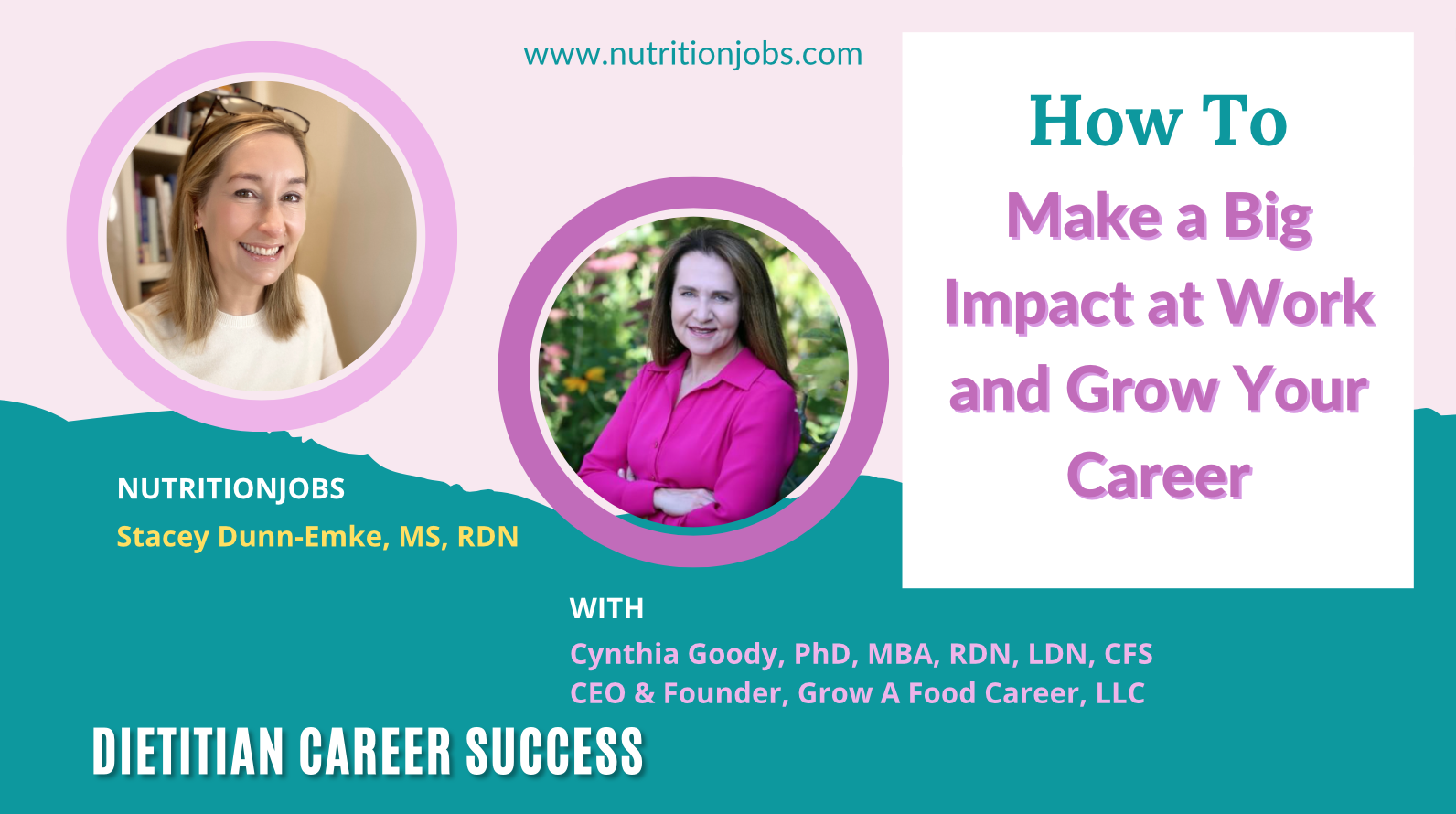
I had the opportunity to interview Cynthia Goody, PhD, MBA, RDN, LDN, CFS. She is the CEO & Founder, Grow A Food Career, LLC, who shared with our community how to make a positive (and big!) impact at work. She offers numerous strategies for leadership, creating coalitions, planning ahead, over delivering at work (without burnout), anticipating issues, and more. Watch our video interview here.
Smart Work vs. Hard Work: What’s the Difference?
Before we delve into strategies for working smarter, let's clarify the key differences between hard work and smart work.
Hard workers spend long hours completing tasks, often exerting a lot of effort. The emphasis is on the quantity of work and physical effort. Hard work is associated with the traditional definition of hard work - putting in the time and energy to get the job done, regardless of the amount of work.
On the other hand, smart workers find efficient ways to achieve the best results in less time with less effort. They focus on the quality of work, leveraging resources, optimizing processes, and prioritizing tasks for maximum impact. Smart work is about finding a better way to achieve the desired results while managing time constraints effectively.
A popular saying often attributed to Bill Gates explains the idea of smart work: "I choose a lazy person to do a hard job. Because a lazy person will find an easy way to do it."
How to Develop Smart Work Skills as a Dietitian
As a dietitian, working smart can lead to better results for your business, your company, and your patients. That means less burnout for you and increased recognition at work.
Here are some strategies to hone your smart work skills:
Leverage technology: Utilize diet planning software, apps, and new ways of communication to streamline your processes and provide top-tier service to your clients. This will not only save a lot of time but also reduce manual, repetitive tasks.
Continual learning: The field of dietetics is constantly evolving. Stay ahead of the curve by taking part in ongoing education. This intelligent work approach ensures that you're always providing the most current and effective advice to your clients.
Collaboration: You can't do it all, and that's okay. Collaborate with other professionals and work together on tasks where appropriate. This smart way of working allows you to focus on what you do best while learning from others and forming alliances.
+ Further Reading: How to Collaborate as a Dietitian
Leaders Work Smart
Successful people in every industry understand that the secret to success is not merely hard effort but strategic, focused effort. Leaders in the field of dietetics are no different - they work smart. They identify priorities, focus on high-impact activities, delegate appropriately, and continually seek new efficiencies.
Leaders also recognize that developing and maintaining relationships within their field and related fields is crucial. By creating coalitions and connecting with colleagues, leaders enhance their knowledge, gain different perspectives, and have a network to call upon when needed.
Here's an article on Leadership Skills as a Dietitian.
Strategies for Getting Noticed at Work
Even if you're working smart, it can sometimes feel like you're just one of many dietitians vying for recognition. Here are some strategies for standing out, according to Cynthia Goody:
Creating coalitions: Forge relationships within and outside your organization.
Connecting: Network with colleagues and superiors, attend professional events, and engage in industry discussions.
Curiosity: Show a willingness to learn and adopt new methodologies, nutrition information, and technologies.
Showing up: Be present, punctual, and prepared. Your reliability will make a positive impression.
Planning ahead: Show foresight by anticipating issues and needs, preparing solutions, and suggesting improvements.
Overdelivering: Where possible, exceed expectations. Go above and beyond in your tasks and duties.
Mentoring: Offer to help junior colleagues or those seeking advice. Not only does this establish you as a leader, but it also helps create a supportive work environment.
It's not about choosing between hard work or smart work. It's about integrating the best aspects of both. By working hard in smart ways, you'll be well on your way to making a positive and lasting impact in your role as a dietitian.
Time management skills
I'm always thinking about how to optimize my time. I love planners and scheduling tools to help me make the most of my work time so that I'm working smarter (and not working late into the night is often the case!).
Effective time management is a cornerstone of smart work. It involves structuring your work day and tasks in a way that optimizes productivity, reduces stress, and allows for flexibility when unexpected issues arise.
Here are some strategies for developing time management skills as a dietitian:
Prioritize tasks: Not all tasks are created equal. Some tasks are urgent, some are important, and some are both. Understand the difference and prioritize your tasks accordingly. A common method for this is the Eisenhower Matrix, which divides tasks into four categories: urgent and important, important but not urgent, urgent but not important, and neither urgent nor important.
Schedule wisely: Plan your day, taking into account your most productive times. Are you a morning person or a night owl? Schedule challenging tasks for when you are most alert and leave routine tasks for when your energy is lower.
Batch similar tasks: Group similar tasks together and complete them in one go. This reduces the time spent switching between tasks and allows for a more focused approach. For instance, you could batch patient consultations, meal plan development, and paperwork into separate blocks.
Use tools and apps: Utilize technology to help manage your time more efficiently. This could include calendar apps, to-do list apps, or project management tools. These tools can help you track your time, set reminders for tasks, and visualize your workload.
Take breaks: It may sound counterintuitive, but taking regular short breaks can actually improve your productivity. Techniques like the Pomodoro Technique, where you work for 25 minutes then take a 5-minute break, can keep your mind fresh and prevent burnout.
Time management isn't about cramming as many tasks as possible into your day. It's about optimizing how you use your time to achieve the best results with the least amount of stress. That's working smarter!
Putting smart work into practice
I can share an example with the work of a fellow successful sports dietitian, Aaron P.:
Aaron is highly regarded in his field, juggling a variety of roles that include counseling teen athletes, creating individualized nutrition and snack plans, conducting research at the University Hospital, and delivering guest lectures. Here's how Aaron exemplifies smart work:
Leveraging Technology: Aaron utilizes specialized nutrition software, to create and quickly develop meal plans and evaluate the nutritional content of meals. This use of technology saves him a significant amount of time compared to manual creation and calculations.
Continuous Learning: Aaron stays up-to-date with the latest nutrition research by staying involved in his dietetic practice groups and journal clubs. This continuous learning approach allows him to provide the best advice to his clients and adapt his methods based on new findings.
Efficient Collaboration: He employs communication tools like Zoom, Slack, and Asana to connect with his colleagues and clients. This enables effective collaboration even when they're in different locations.
Documentation and Organization: Aaron maintains meticulous digital records of all his client consultations, ensuring that he can quickly refer back to any details from previous sessions. This level of organization means he doesn't waste time searching for misplaced notes or trying to recall specific details.
Time Management: Despite his full schedule, Aaron rarely experiences undue stress. He understands how to prioritize his tasks and maintains discipline with his work hours, ensuring he has time for rest and leisure. He uses tools like Google Calendar to manage his time effectively, working at his best while maintaining a healthy work-life balance.
Networking: Aaron understands the value of strong professional connections. He attends conferences, actively engages in online forums, connects with LinkedIn members, and interacts with his peers to learn from them, share his insights, and build a robust professional network.
By working smart, Aaron is able to handle his varied responsibilities effectively, stay at the forefront of his field, and provide exceptional care to his clients.
Takeaways
To make a positive impact as a dietitian, it's crucial to understand the difference between hard work and smart work and incorporate the best of both into your professional life. Hard work focuses on the quantity and effort, while smart work is about maximizing results with the least amount of time and effort. Developing smart work skills like leveraging technology, continual learning, efficient collaboration, and precise documentation can significantly enhance your productivity and effectiveness.
Remember, leaders in the field are those who manage to work smart, build strong professional networks, and continuously seek new efficiencies. To stand out and make a mark, consider strategies like creating coalitions, connecting with others, showing curiosity, planning ahead, overdelivering on expectations, and mentoring others. By blending hard work with smart strategies, you're on the path to a highly successful career in dietetics.
About the Author
Stacey Dunn-Emke, MS, RDN, is the Founder Owner of NutritionJobs and an established dietetic career expert. She helps steer dietetic and nutrition professionals to a successful job search process with the top-ranked dietetic job board platform, NutritionJobs.com. Stacey is the author of The Dietetic Resume Guide and numerous dietetic career action-ables. She gives the tools to create a modern standout dietetic resume to land that job interview, help with job interview prep, and with creating Compelling LinkedIn profiles. Stacey has interviewed and hired many dietitians. Since running NutritionJobs in 2000, she has reviewed thousands of dietetic resumes. She works closely with dietetic hiring managers and recruiters to know the standout elements on a resume that land a job interview. Stacey speaks on successful compensation negotiation at professional conferences and frequently consults with the Academy of Nutrition and Dietetics at FNCE and co-created the webinar series, Dietetic Career Hack: The Complete Networking and Resume Guide and Dietetic Career Hack Part II: Interviewing Tips and Tricks. Her previous dietitian jobs have been in clinical, nutrition support, and research.
